How Luxembourg’s SolarCleano is targeting West Africa’s hidden energy losses
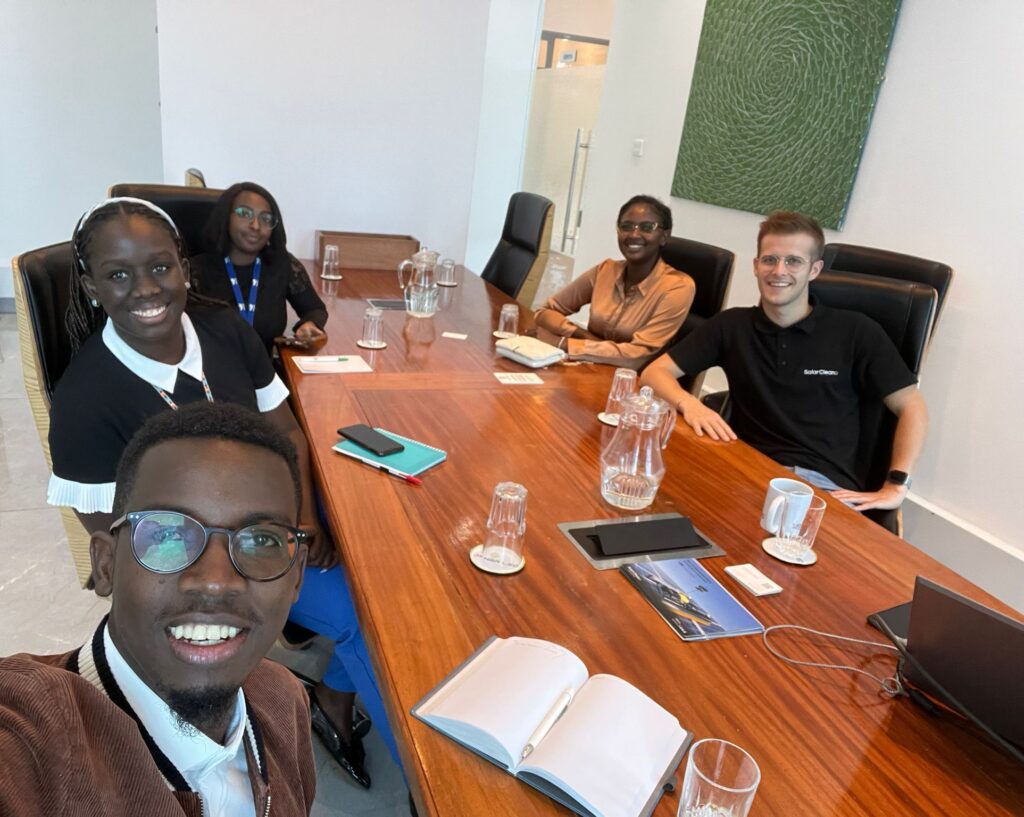
SolarCleano’s innovative approach to solar panel maintenance in West Africa is in the spotlight in a recent article by Silicon Luxembourg. The piece explores how the company’s autonomous robotic cleaning solution helps tackle one of the region’s key renewable energy challenges: energy losses caused by dust accumulation on solar panels.
Supported by the Business Partnership Facility (BPF), SolarCleano Africa is working with local partners to deploy this technology at scale — contributing both to stronger renewable energy performance and to local job creation.
Read the full article on Silicon Luxembourg: https://www.siliconluxembourg.lu/how-luxembourg-solarcleano-is-targeting-west-africa-hidden-energy-losses/
In the Sahel, where sunlight is abundant and relentless, a solar farm hums under a pale, dust-laden sky. Rows of photovoltaic panels stretch towards the horizon, built to harness one of the region’s greatest natural assets. Yet the numbers do not add up. Output is down. Cleaning costs are up. Fine layers of dust settle faster than they can be removed, choking efficiency and eroding returns.
At one industrial site in Togo, monthly losses reached around €3,000, while more than 3,000 litres of water were consumed simply to keep panels operational. It is a quiet inefficiency, but a pervasive one across West Africa’s rapidly expanding solar sector.
This is the gap Luxembourg-based Solarcleano is now moving to close.
Cleaning up the energy transition
Founded less than a decade ago, Solarcleano has grown from a small garage operation in Bascharage into a global robotics player active in more than 100 countries. Its machines, once remote-controlled, are now fully autonomous systems capable not only of cleaning panels but scanning them and conducting thermal analysis.
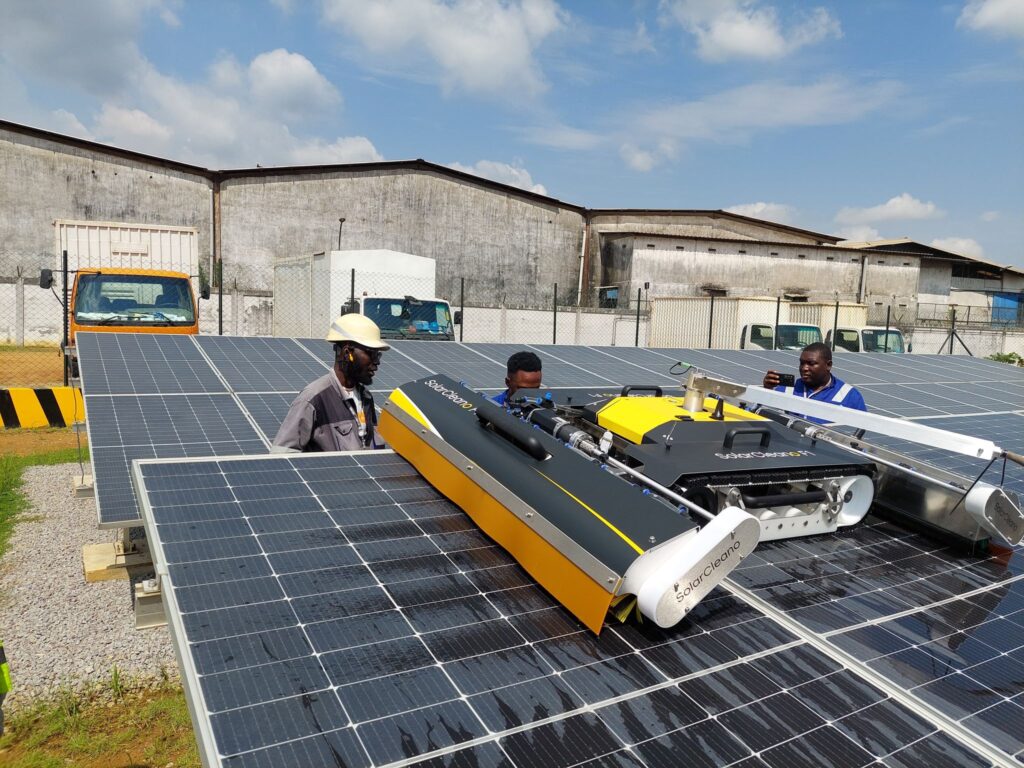
The premise is deceptively simple. Dust reduces solar output. Clean panels generate more electricity. But in practice, maintenance is labour-intensive, water-dependent and often inconsistent, particularly in regions where technical resources are limited.
Solarcleano’s robots aim to change that equation. According to Romain Gourmet, who has been with the company since its early days, deployments in West Africa have already demonstrated measurable impact: “we can prove the increased energy output, the lower operational cost, the amount of water saved”.
In Togo, the company’s machines cut both water use and financial losses by a factor of ten. Across existing sites in the region, operating hours are rising sharply, a signal of growing demand for performance optimisation rather than just capacity expansion.
West Africa: high potential, structural challenges
The region itself is central to Solarcleano’s strategy. Investment in renewable energy is accelerating, driven by strong solar irradiation and rising electricity demand. Yet operational challenges remain acute.
“There are limited technical resources on site,” Gourmet explains. “We need people locally to ensure the machines are well used, well maintained, and that there is quality in operations.”
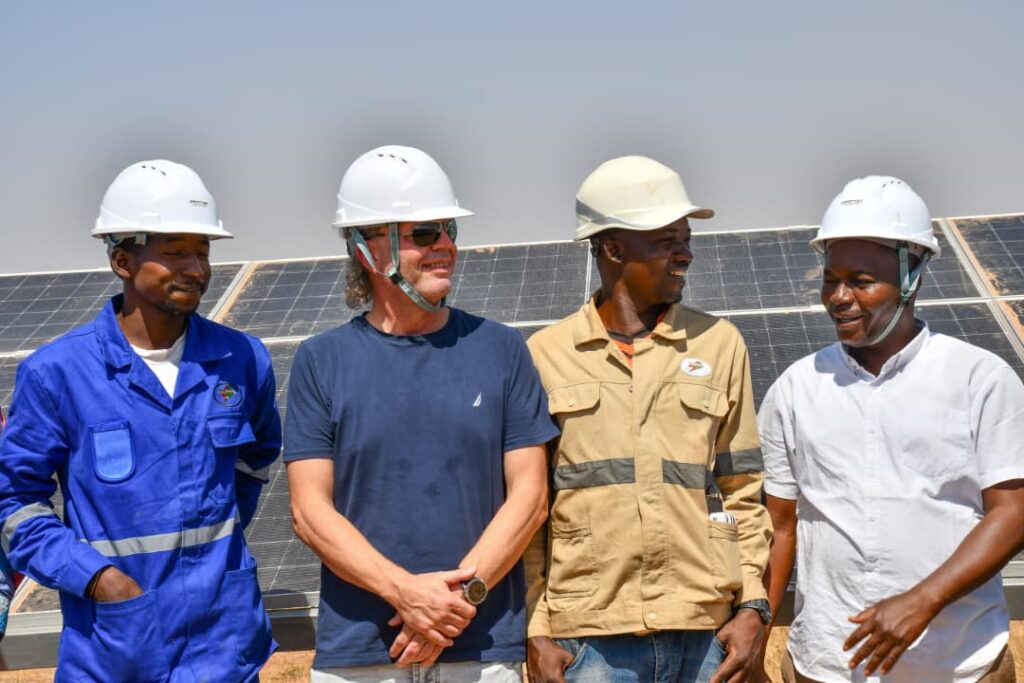
There are also social and structural considerations. In labour-rich economies, the introduction of robotics can raise concerns about job displacement. Solarcleano has had to position its technology not as a replacement, but as an enabler. The machines are semi-autonomous, designed to support workers, reduce physical strain, and improve efficiency.
Education and training, therefore, become as critical as the technology itself.
Climate, too, plays a role. High dust levels, heat and remote locations require machines to operate reliably under harsh conditions. These constraints have shaped both product development and the company’s go-to-market approach.
From pilot projects to permanent presence
Until now, Solarcleano’s presence in West Africa has been project-based. That is about to change.
Over the coming months, the company will establish a permanent operational base in Senegal, working with a long-standing local partner. The plan is to open an office that will serve multiple functions: a training centre, a logistics hub, and a regional support base.
The facility will stock spare parts locally, addressing one of the most persistent bottlenecks in the region. Shipping components from Europe can be slow and unpredictable. A local warehouse is expected to significantly reduce downtime for clients.
At the same time, the site will host training programmes for operators and partners, helping to build the technical capacity needed to sustain operations. Solarcleano also plans to deploy a broader portfolio of machines, rather than limiting itself to a single product line, reflecting demand across different types of solar installations.
The ambition extends beyond Senegal. Once established, the operation is intended as a springboard into the wider West African market, where countries such as Ghana and Nigeria are already seeing increased solar investment.
De-risking expansion through partnership
This acceleration has been made possible in large part by support from Luxembourg’s Business Partnership Facility (BPF).
For Solarcleano, expansion into West Africa was always on the roadmap. But the risks were significant: upfront investment, uncertain returns, and the complexity of building local ecosystems. The BPF has helped shift that balance.
“It reduced the risk and accelerated the deployment,” Gourmet says. “It helped us move from a long-term plan to something immediate.”
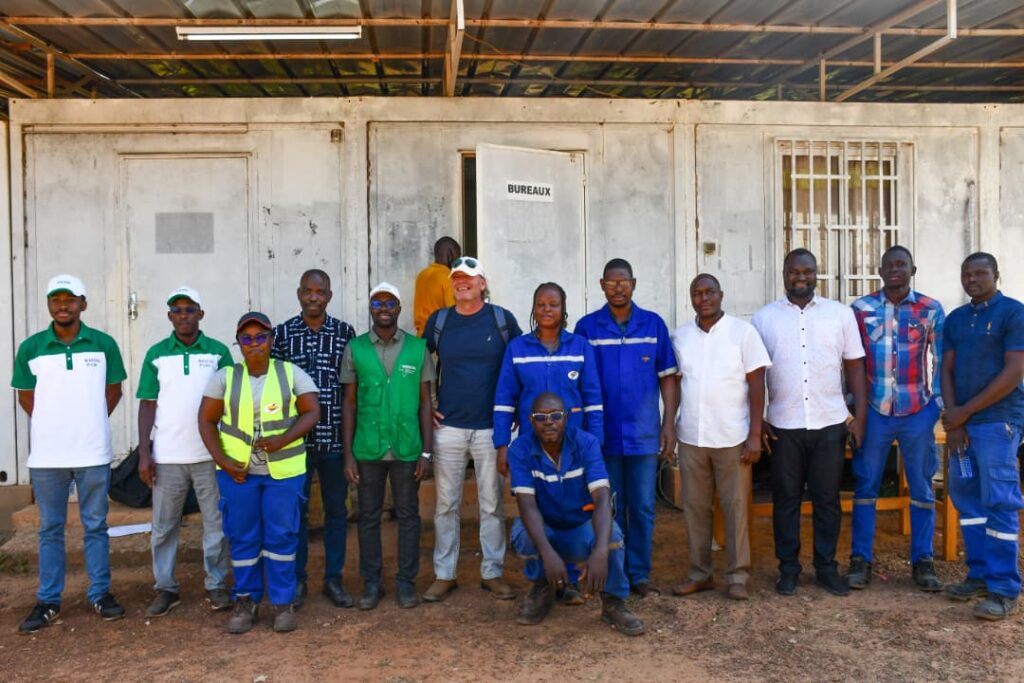
The funding supports not just equipment deployment, but the broader ecosystem required for success: local staffing, training, infrastructure and partnership development. Crucially, it is tied to measurable outcomes. Solarcleano will track metrics ranging from energy yield improvements and water savings to job creation and training delivery.
What the BPF offers and who it is for
The Business Partnership Facility is a flagship instrument of Luxembourg’s development cooperation strategy, designed to bridge commercial innovation and sustainable development.
Now in its 15th edition, the programme offers co-funding of up to €300,000 to Luxembourg and EU-based companies developing projects in partnership with organisations in developing countries. Since its launch in 2016, it has supported more than 50 projects across over 20 countries.
The model is deliberately structured to balance impact and viability. Projects must demonstrate clear development benefits, such as job creation or environmental gains, while remaining financially sustainable. Funding is disbursed in stages, contingent on performance against agreed metrics, creating a built-in accountability mechanism.
Eligibility is targeted at established companies, with requirements including a minimum of three years’ operation, at least five employees, and sufficient turnover to support the project. Partnerships with local actors are mandatory, ensuring that solutions are adapted to on-the-ground realities rather than exported wholesale.
For 2026, applications are open until 8 May, with a two-stage selection process culminating later in the year.
Jess Bauldry, a journalist at Silicon Luxembourg, has a strong background in UK newspapers before joining Luxemburger Wort and Delano. Her diverse interests include fiction writing, cycling, and stand-up comedy, which contribute to her unique storytelling approach and fresh perspective in reporting.
Photo credit: Solarcleano
Related articles
-
Business Partnership Facility
 Mar. 2024
Launch of the 11th edition of the Business Partnership Facility – A co-financing to foster innovative business partnerships in developing countries
The Luxembourg Development Cooperation kicks off the 11th edition of the Business Partnership Facility (BPF) with a new call for proposals, open to Luxembourgish and European companies. -
Business Partnership Facility
 Mar. 2024
Information webinar on the Business Partnership Facility – 4 April 2024
Explore new business horizons with the BPF. Join our webinar dedicated to European companies to learn how to benefit from co-financing of up to EUR 200,000 for innovative and impactful business partnerships in developing countries. Register now to find out more! -
Business Partnership Facility
 Mar. 2024
The BPF in the spotlight on Delano!
Dive into the journey of COCA, a Luxembourgish architectural firm supported by the BPF, and discover how they are revolutionizing construction in Ghana!