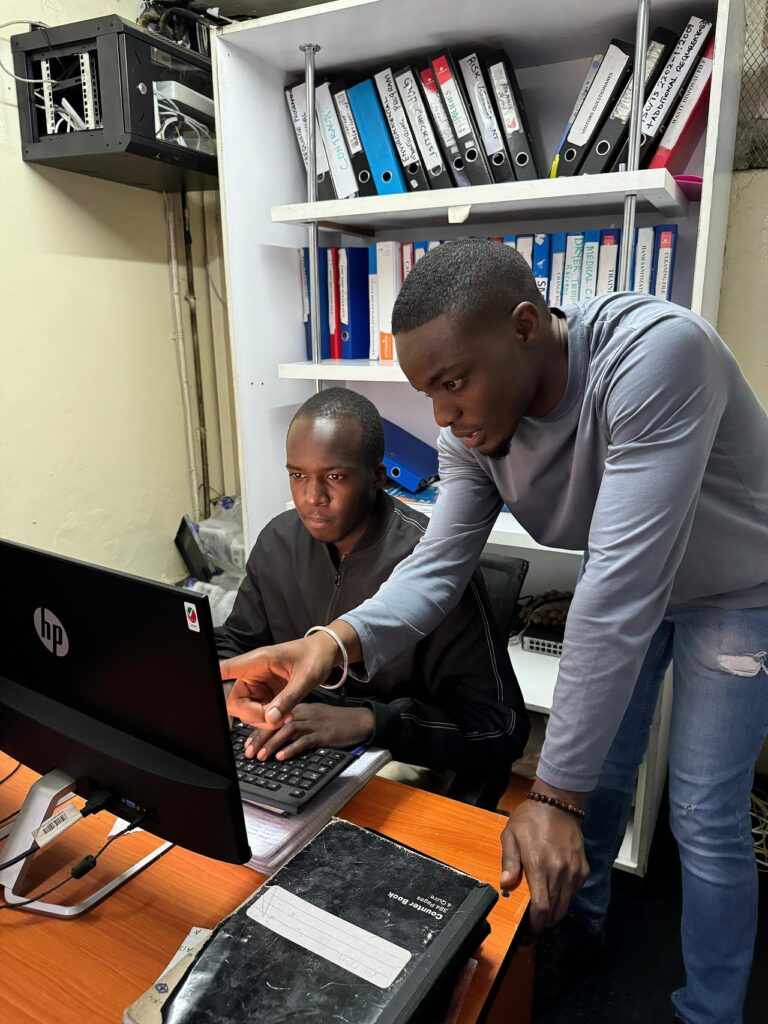
Accelerating Kenya’s e-mobility with smart, sustainable batteries
Lead partner
Madewithlove (Belgium)
Associated partner
Jump (Belgium)
Local partner(s)
Spiro (Kenya)
Amount of co-financing
EUR 200,000
- Kenya
- 2024
- Ongoing
Challenge
Kenya generates 92% of its electricity from renewable sources, yet 70% of it remains unused at night. Meanwhile, Nairobi struggles with poor air quality, driven mostly by road transport, waste management issues and biomass fuel burning. The rise in two-wheelers is exacerbating the situation, intensifying both pollution and climate impacts. Moreover, motorcycle riders—especially those working as taxi and delivery drivers—are heavily impacted by rising fuel costs.
Kenya has significant market potential for electric bikes, with numbers rising sharply over the past two years, projected to reach nearly 5% of the fleet in 2025. However, the high acquisition cost and the lack of battery health monitoring remain key obstacles to mass adoption.
Innovative solution
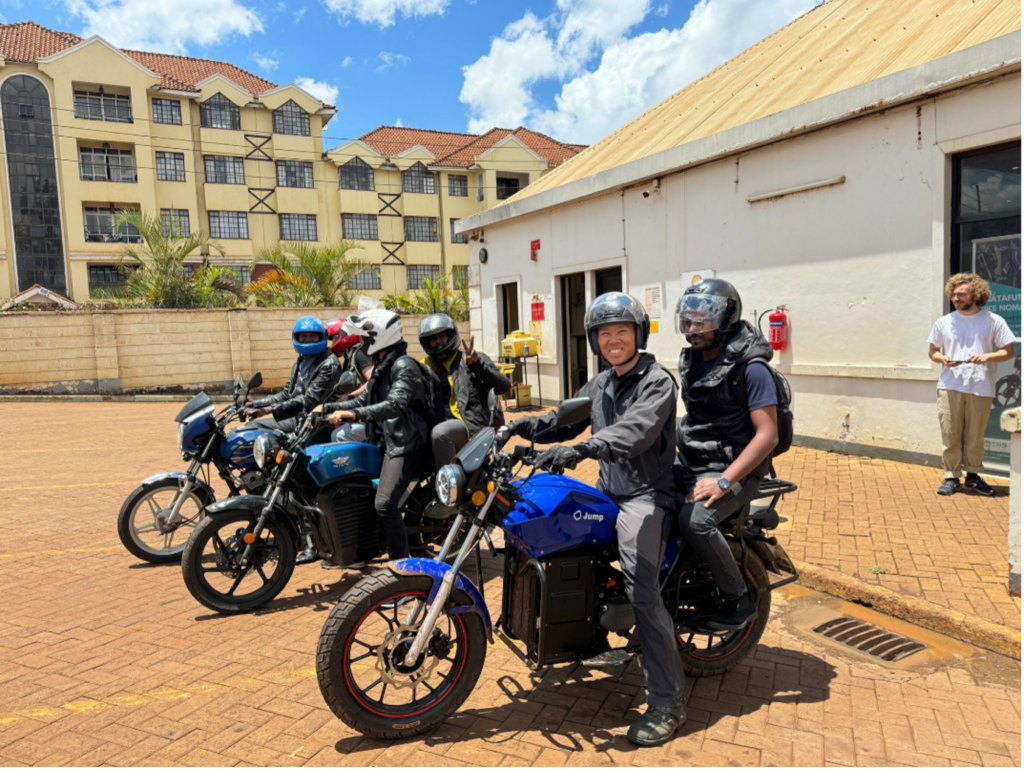
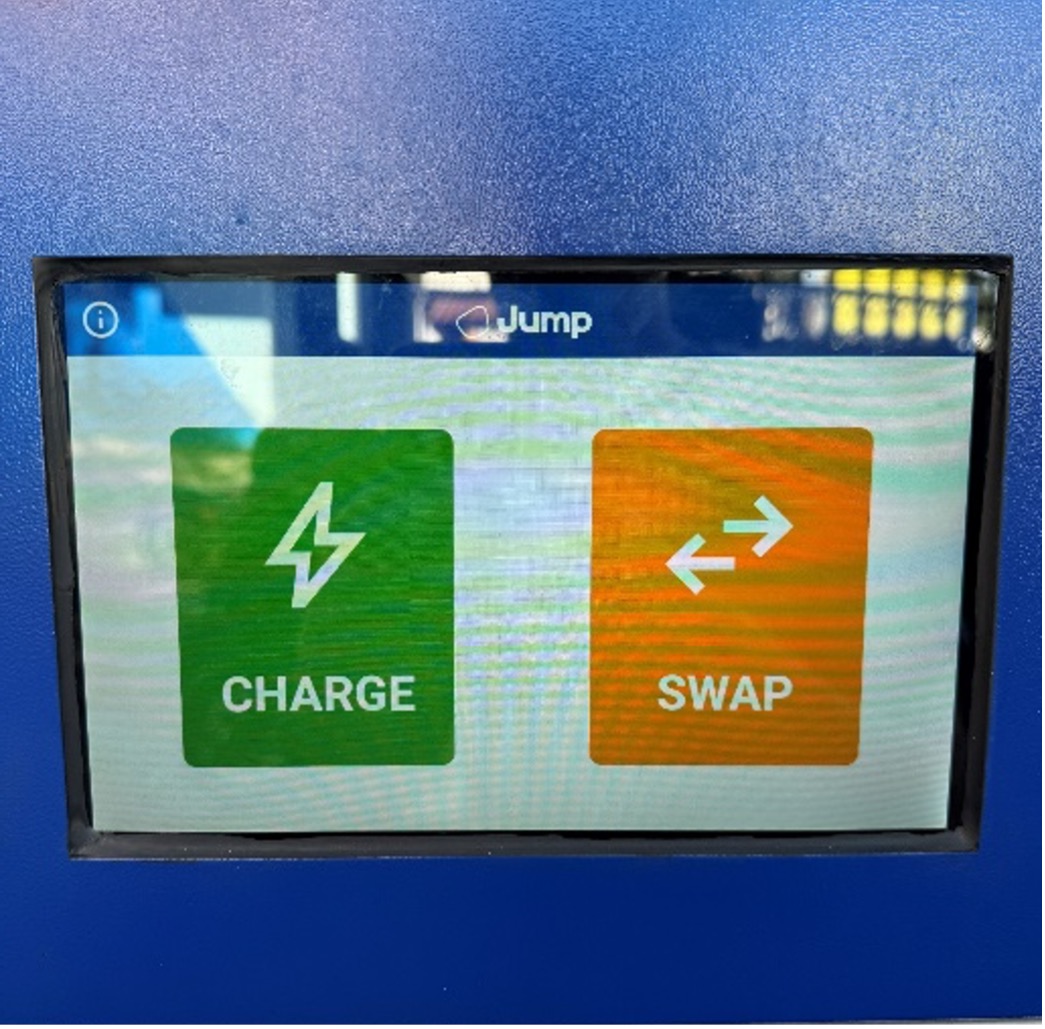
Two Belgian startups, Jump and MadewithLove, have teamed up to create a fully electric ecosystem with swappable batteries that meet the highest standards of quality and performance. Their innovation focuses on advanced battery health monitoring and real-time data collection to predict and prevent battery degradation, allowing for smarter charging and usage.
The Belgian team is partnering with two Kenyan companies: Zephyr Wheels, a local motorbike manufacturer, and SafeBoda, a popular mototaxi platform. Their shared goal is to launch a pilot project in Kenya with a fleet of 40 electric motorbikes, testing the business model, proving the solution’s viability, and attracting investors for future scaling. In the long run, the goal is to expand this technology across other countries in the region where electric two-wheelers are on the rise.
Impact
At the end of the pilot, in 2026:
- Installation of 3 charging stations for 66 batteries in operation
- Support for the transition of 33 moto-taxis from petrol to electric mobility
- Reduction of CO2 emissions by 37.8 tons


Targeted Sustainable Development Goals
-
Three charging stations are installed, with 66 batteries in operation, enabling the successful transition of 33 moto-taxis from petrol to electric mobility.
-
Using electric bikes reduces CO₂ emissions by 37.8 tons compared to traditional fuel-powered alternatives.
News
-
Business Partnership Facility
Apr. 2026The Business Partnership Facility celebrates 10 years of impact
Relive the ten first years of the BPF through this short video! -
Business Partnership Facility
Apr. 2026An innovative partnership between insurance and microfinance for climate resilience
In this in‑depth interview, the key stakeholders of this BPF‑supported project in Bangladesh explain how the partnership between APDS and IBISA was built, how their complementary expertise addresses climate‑related risks, and the impact they aim to achieve for farmers and local financial systems. -
Business Partnership Facility
Apr. 2026When insurance meets microfinance: a new approach to climate resilience
What happens when insurance innovation meets microfinance, with the right public‑private support? This Paperjam English article shows how BPF backing helped unlock a solution that strengthens farmers’ resilience to climate risks while safeguarding the sustainability of microfinance institutions. -
LuxAid Challenge Fund
Mar. 2026Driving innovation for impact in Costa Rica
Since the launch of the current call for proposals, the initiative has drawn strong attention from Costa Rica’s business and innovation community. Several national media outlets have reported on the Fund, reflecting the relevance of its mission: supporting companies that are ready to consolidate and scale solutions with measurable development… -
LuxAid Challenge Fund
Feb. 2026Unlocking Agritech and Fintech innovation potential in Costa Rica
The Luxembourg Development Cooperation and the Costa Rica Ministry of the Economy, Industry and Commerce (MEIC) are joining forces to support Costa Rica’s most ambitious Agritech and Fintech innovators. Early-stage business proposing a high-impact solution are invited to apply before 30 March 2026. Up to EUR 120,000 in co-financing is… -
LuxAid Challenge Fund
Nov. 2025How businesses from Kosovo are transforming education and manufacturing
In late 2024, Luxembourg’s Development Cooperation launched a new call for proposals under the LuxAid Challenge Fund, a programme designed to support innovative, locally driven solutions to social and economic challenges. Competition was intense: more than 80 applications poured in from across Kosovo, each with bold ideas to tackle the… -
LuxAid Demonstration Fund
Feb. 2026Luxembourg Embassy briefing highlights support for innovation and private sector growth in Kosovo
On 28 January 2026, the Luxembourg Embassy in Pristina hosted an information and briefing event that brought together representatives of Kosovo’s business community, institutions, and partners to present the LuxAid Demonstration Fund (LDF), an initiative financed by the Grand Duchy of Luxembourg and implemented by LuxDev, the Luxembourg Development Cooperation… -
LuxAid Demonstration Fund
Dec. 2025Over 1 million euros to supports high-impact business innovations in Kosovo
After the success of the first edition in 2025, the Luxembourg Development Cooperation is launching a new call for proposals aimed at well-established Kosovo-based businesses. The LuxAid Demonstration Fund (LDF) seeks to accelerate the growth and impact of digital and green innovative solutions. Selected projects will receive up to EUR… -
LuxAid Demonstration Fund
Dec. 2025Driving Change in Kosovo: How businesses are tackling city congestion and industrial waste
What if the greatest challenges to Kosovo’s future weren’t a shortage of ideas, but the struggle to turn them into reality? Across the country, a new wave of companies is turning real-world problems into scalable products – from easing urban congestion to cutting industrial waste. Among the initiatives supporting this…